
December 2025 brings heavy snowfalls to Northeast Ohio, with Lake County expecting over 60 inches and snow loads exceeding 20 pounds per square foot, putting roofs at risk of sagging, cracking, or catastrophic collapse. Older homes, commercial flat roofs, and properties with poor structural integrity face the greatest danger from accumulated snow weight combined with freezing temperatures and high winds up to 50 mph. At Brad Smith Roofing, a family-owned GAF Master Elite® contractor with over 45 years of experience serving Cuyahoga, Lake, and Geauga Counties, we specialize in snow load assessments and structural reinforcements to protect your property. We will explain snow load dangers, inspection methods, safety measures, and our emergency services to keep your roof—and everyone under it—safe through winter’s heaviest storms.
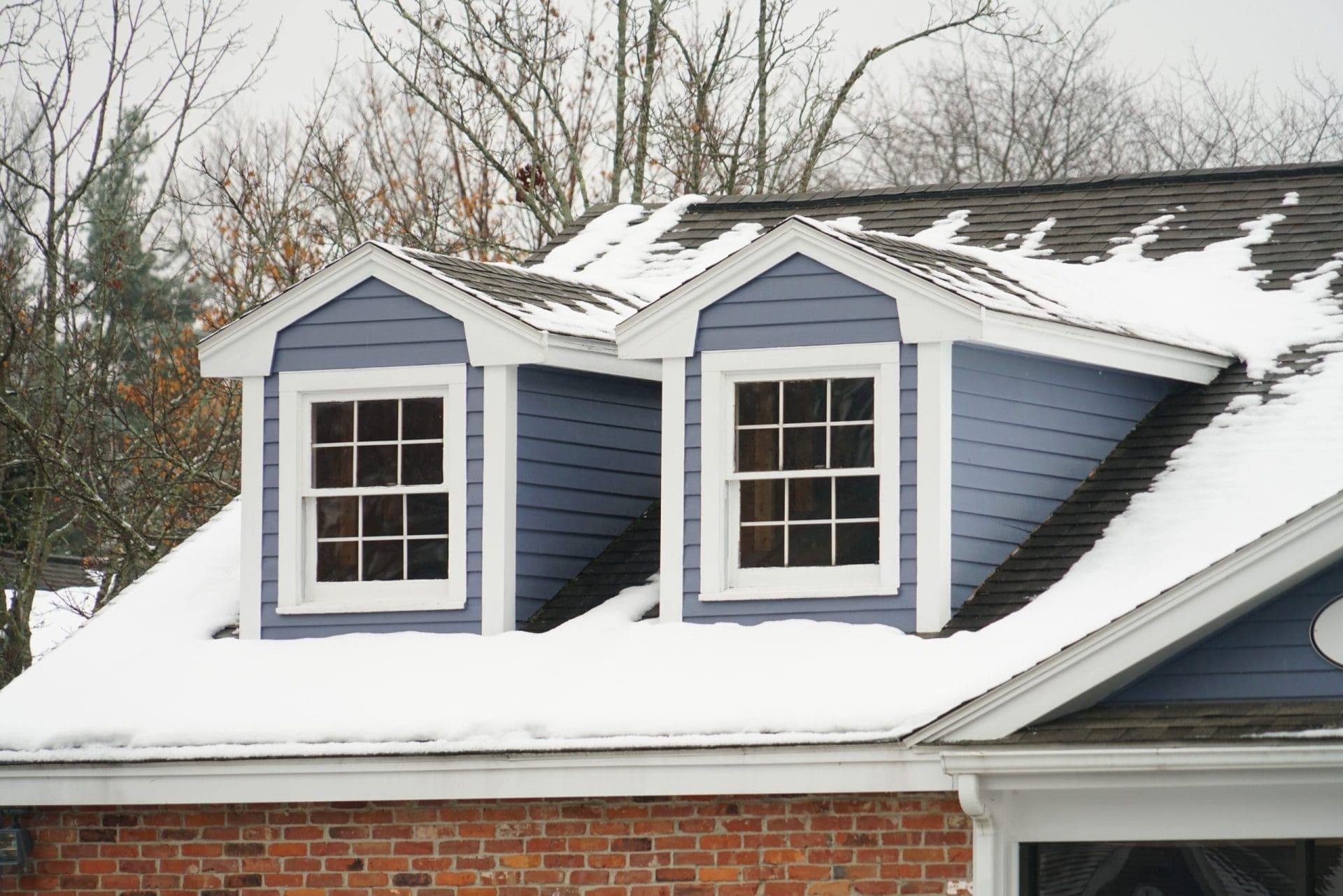 Understanding Snow Load Risks in December
Snow load refers to the weight snow exerts on a roof structure, calculated by snow depth, density, and roof design. Northeast Ohio’s wet, heavy “Lake Effect” snow can weigh 20-30 pounds per cubic foot, far heavier than dry powder. A typical 12-inch accumulation equals 30-50 pounds per square foot, exceeding many older roofs’ design capacity of 20-40 pounds per square foot. December’s rapid accumulation during blizzards, combined with ice buildup, creates dangerous overloads. Structural failures can cost $20,000-$100,000+ in repairs, displace families, and pose life-threatening risks. Our free 40-point inspections identify vulnerabilities before collapse, providing detailed structural reports and immediate action plans.
Why December Poses Peak Snow Load Danger
December marks Northeast Ohio’s snowiest month, with Geauga County’s elevated terrain receiving 15-20 inches in single storms. Holiday travel reduces monitoring, while frozen ground prevents snowmelt, allowing dangerous accumulation. Older homes (pre-1980s) often lack modern engineering for heavy snow loads, and commercial flat roofs with ponding water add exponential weight. Wind-drifted snow creates uneven loads, stressing specific roof sections. Without proactive checks, small sags become collapses under overnight accumulations, especially dangerous during holiday gatherings when homes are fully occupied.
Signs Your Roof Faces Snow Load Danger
- Sagging Rooflines: Visible dips or curves in roof ridges or valleys indicate structural stress.
- Cracking or Creaking Sounds: Audible structural strain from snow weight.
- Sticking Doors/Windows: Foundation shifts from roof pressure affecting the entire structure.
- Interior Cracks: New fissures in walls or ceilings signal roof deflection.
- Gutters Pulling Away: Overloaded eaves strain attachments.
- Ponding Water: Flat roofs with standing water add critical weight.
If you spot these, evacuate immediately and call professionals—our 24/7 emergency team assesses risks safely using drones to avoid adding weight.
Professional Snow Load Inspection Process
- Structural Load Capacity AssessmentWe calculate your roof’s design capacity against current snow loads using engineering standards and local building codes. Older truss systems or modified roofs often fall short of modern 40-60 psf requirements. We use laser levels and deflection gauges to measure sags as small as 1/4 inch, identifying at-risk areas.
- Snow Removal and Load ReductionSafe snow removal prevents collapse. Our OSHA-trained crews use lightweight roof rakes, snow blowers with extension wands, and aerial lifts to remove snow without walking on roofs. We prioritize heavy accumulation zones and monitor structural response during removal, removing snow in calculated increments to avoid sudden load shifts.
- Roof Deck and Truss InspectionWe examine roof decking for rot, delamination, or compression damage from snow weight. Wooden trusses show compression cracks or uplift separation. Commercial roofs receive membrane integrity tests and core sampling to assess insulation compression under snow loads.
- Drainage and Ponding EvaluationFlat roofs with clogged drains accumulate deadly ponding—12 inches of water equals 62 pounds per square foot. We clear scuppers and test drainage systems, recommending tapered insulation or additional drains to prevent future overloads.
- Reinforcement RecommendationsFor marginal roofs, we suggest engineered reinforcements like sistered trusses, steel bracing, or upgraded decking. Impact-resistant GAF Timberline® HDZ shingles and enhanced underlayments improve overall resilience against snow and wind loads.
Safe Snow Load Management Techniques
- Prioritized Removal: Start with heaviest accumulations near structural weak points.
- Load Distribution: Remove snow evenly to prevent uneven stress.
- Thermal Monitoring: Infrared cameras detect heat loss contributing to uneven melting.
- Temporary Shoring: Interior supports for severely sagging roofs during storms.
- Drone Assessments: Aerial inspections avoid adding weight while documenting damage.
Never use heavy equipment or walk on snow-covered roofs—our methods comply with OSHA and local safety codes.
Cost Analysis: Prevention vs. Collapse
- Emergency Removal: $500-$2,000 per visit during storms.
- Minor Reinforcements: $1,000-$5,000 for bracing or trusses.
- Partial Roof Replacement: $5,000-$15,000 for damaged sections.
- Full Structural Repair: $20,000-$100,000+ for collapsed roofs.
- Business Interruption: Commercial losses from closures and inventory damage.
- Insurance Premiums: Repeated claims increase rates significantly.
Proactive inspections ($200-$500) and seasonal maintenance plans save exponentially, maintaining GAF warranties and preventing liability.
Why DIY Snow Removal Is Dangerous
- Fall Risks: Slippery surfaces cause thousands of injuries annually.
- Structural Shock: Sudden weight removal creates dangerous load shifts.
- Roof Damage: Metal shovels puncture shingles and membranes.
- Overload Aggravation: Added worker weight tips roofs past failure points.
Our certified crews use specialized equipment and follow engineered removal protocols, ensuring safety and effectiveness.
Case Study: December Snow Load Rescue
During the 2022 “Snowmageddon” in Mentor, a 1960s ranch home sagged 6 inches under 24 inches of snow. Our emergency team used drone assessment, strategic snow removal, and temporary shoring, then reinforced trusses for $3,800—preventing $45,000 in collapse damage. The family celebrated Christmas safely under their stabilized roof.
December Safety Tips for Homeowners
- Monitor Weather Alerts: Track snow forecasts and accumulation rates.
- Limit Roof Access: Never climb on snow-covered roofs.
- Clear Ground Snow: Remove drifts against exterior walls to reduce wind loading.
- Check Attic Supports: Monitor for ceiling bulges or cracks.
- Install Load Indicators: Simple strain gauges alert to dangerous deflections.
- Prepare Emergency Kits: Shovels, tarps, and contact numbers for rapid response.
Our maintenance plans include seasonal snow load monitoring tailored to Northeast Ohio’s winter patterns.
 Why Choose Brad Smith Roofing?
 Why Choose Brad Smith Roofing?
- Free 40-Point Inspections: Comprehensive snow load risk assessments.
- 24/7 Emergency Snow Removal: Rapid response during blizzards.
- Structural Engineering Partnerships: Expert reinforcements for marginal roofs.
- GAF Master Elite® Certification: Premium materials and warranties.
- Insurance Claim Assistance: Detailed documentation for coverage.
Family-owned dedication ensures Cuyahoga, Lake, and Geauga County properties stay safe.
Stay Safe This December
Don’t risk collapse under December’s heavy snow loads. Brad Smith Roofing provides expert snow load safety inspections and emergency services. Call 440-835-3377 for immediate assessment or schedule your inspection today!

Stacey is a graduate of BGSU, where she graduated with a B.A. in Interpersonal Communication and a Minor in Marketing. Stacey’s focus of study was Business Management. Stacey has been with the Company since November of 1999, she became the Office Manager in 2003. Stacey now serves as the Vice-President for the Company. She has been a Member of the Rocky River Chamber of Commerce since 2016. Stacey and her brother, Drew Smith, continue to follow in their Father’s footsteps bringing new innovations, new programs, new products and new techniques to help the Company’s efficiency, safety and customer satisfaction.
