
January 2026 has delivered exactly what Northeast Ohio fears most: week after week of sub-zero temperatures, repeated lake-effect snow bands, and a thick, frozen blanket that makes every roof look pristine from the street. But that blanket is a perfect disguise. At Brad Smith Roofing—a family-owned GAF Master Elite® contractor serving Cuyahoga, Lake, and Geauga Counties for over 45 years—we have performed more January inspections than any other month for one simple reason: the damage December storms create is silently getting worse every single day the temperature stays below freezing. By the time homeowners finally see water stains in February or March, the destruction has been growing unchecked for 60–90 days. What could have been a $1,200 repair in January becomes a $12,000–$30,000 restoration in spring.
The Five Hidden Roof Killers Active Right This Second
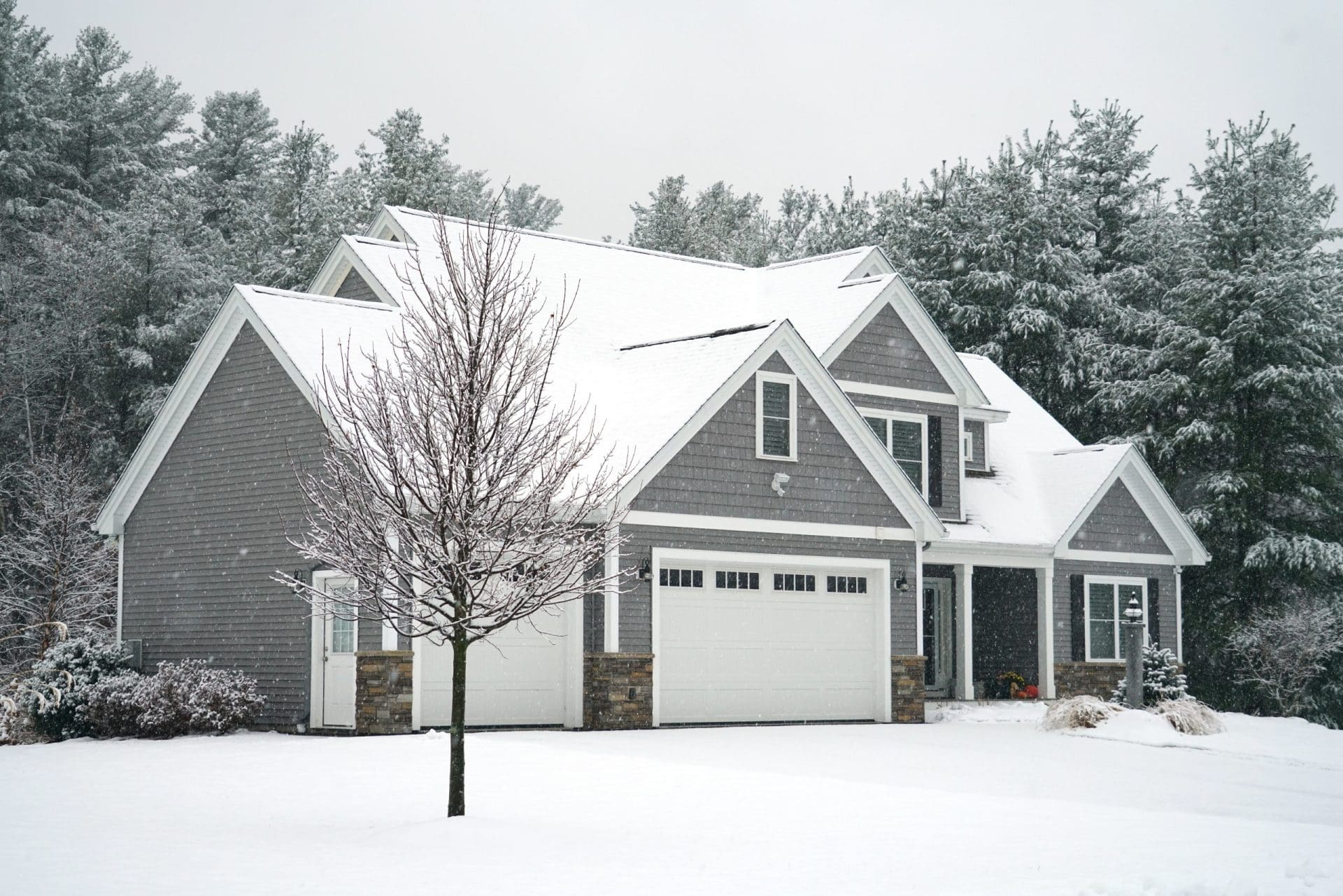 Active Leaks That Are Frozen Solid
Water entered through lifted shingles, cracked vent boots, deteriorated chimney flashing, or failed skylight seals during December wind and ice events. Instead of dripping into your living space, it froze the moment it hit cold attic air. Our FLIR thermal cameras routinely find 10–40 linear feet of frozen water paths in January that show zero visible ceiling stains—yet.
Crushed and Waterlogged Attic Insulation
Twenty-four inches of wet, heavy lake-effect snow equals 40–65 pounds per square foot of dead weight. That load compresses fiberglass batts from 12 inches to 4–6 inches and turns blown-in cellulose into a soggy mat. Compressed insulation loses 40–70 % of its R-value overnight. Homeowners discover this when their January heating bill jumps $250–$600 per month compared to last year.
Ice-Jacking of Flashing and Roof Penetrations
Water trapped in micro-cracks expands 9 % every time it freezes. With nightly lows of –5 °F to –20 °F wind chill in January 2026, those cracks are growing wider every single night. A hairline separation that started in December is now a ⅛–¼ inch gap—large enough for wind-driven snow to pack in and guarantee catastrophic spring leaks.
Shingle Brittleness and Accelerated Granule Loss
December wind events stripped protective granules. January’s extreme cold makes asphalt shingles brittle as pottery. One more heavy, wet snow band and those shingles will crack like thin ice under foot traffic or additional weight. Those cracks stay sealed by ice until the first 40-degree day—then every crack leaks simultaneously.
Cumulative Snow Load Structural Stress
Many roofs across Mentor, Westlake, Chardon, and Cleveland’s eastern suburbs are currently carrying 35–65 pounds per square foot. Older truss systems built before 1990 were engineered for only 20–30 psf. Deflection that began in December has now been under continuous load for 4–8 weeks. Some roofs have already passed the point of elastic recovery and will sag permanently or suffer cracked decking when the snow finally melts.
Our Proven January Reality Check Process
We use winter-specific technology most contractors never deploy in January:
- 48-megapixel drone with 20× optical zoom – safely maps damage under snow cover
- FLIR T1020 thermal imaging camera (–40 °F to 2,000 °F range) – locates heat leaks and frozen water paths invisible to the naked eye
- Non-invasive moisture meters and core sampling (commercial roofs) – confirm wet insulation and membrane saturation
- Laser deflection measurements – quantify exact structural stress from snow load
- Complete photo/video documentation package delivered same day – ready for insurance supplements
Every single one of these services is included with every January inspection.
 Your Immediate January 2026 Action Plan
 Your Immediate January 2026 Action Plan
- Call 440-835-3377 this week to lock in one of our remaining January inspection slots
- Demand thermal imaging + drone documentation (included free)
- Fix ventilation and insulation deficiencies now while 2026 federal and utility rebates are still active
- Never wait for visible water stains—they are the last symptom, not the first.
Contact Brad Smith Roofing Today for Your January Inspection!
Don’t let January’s beautiful snow hide tens of thousands in preventable damage. Brad Smith Roofing has been revealing hidden winter damage for Northeast Ohio families and businesses since 1978. Call 440-835-3377 today for your free January Roof Reality Check and stop the damage before the big thaw begins.
Common FAQS About January Roof Inspections
1. What damage can snow hide on a Northeast Ohio roof in January?
Leaks frozen in place, crushed attic insulation, cracked flashing, shingle brittleness, and structural stress from 40–65 psf snow loads.
2. How can I tell if my roof is damaged under the snow?
Look for sagging rooflines, new interior cracks, sticking doors, or creaking sounds. A free drone + thermal inspection reveals hidden issues.
3. Do I need to wait until spring to see roof damage in Lake County?
No — waiting turns $1,000 repairs into $15,000+ interior damage. January inspections catch problems while they’re still affordable.
4. Does Brad Smith Roofing charge for January inspections?
Never. Every January Reality Check with drone and thermal imaging is 100 % free.
5. Can snow crush attic insulation in Cuyahoga County?
Yes — 24–30 inches of wet lake-effect snow can compress insulation 50–70 %, spiking heating bills and causing ice dams.
6. How fast can you inspect my roof in Geauga County in January?
Same-day or next-day service, 7 days a week.
7. Will my insurance cover hidden damage found in January?
Yes, if documented before spring thaw. We provide all photos and reports they require.
8. What happens if I ignore roof damage under the snow?
Hidden leaks become mold, crushed insulation fails, and minor repairs turn into full roof replacements.
9. Do you serve commercial roofs too in January?
Yes — we use core sampling and structural load calculations on flat roofs across Mentor, Westlake, and Chardon.
10. How do I schedule a free January inspection?
Call 440-835-3377 — 24/7 live answer, even on weekends and holidays.

Stacey is a graduate of BGSU, where she graduated with a B.A. in Interpersonal Communication and a Minor in Marketing. Stacey’s focus of study was Business Management. Stacey has been with the Company since November of 1999, she became the Office Manager in 2003. Stacey now serves as the Vice-President for the Company. She has been a Member of the Rocky River Chamber of Commerce since 2016. Stacey and her brother, Drew Smith, continue to follow in their Father’s footsteps bringing new innovations, new programs, new products and new techniques to help the Company’s efficiency, safety and customer satisfaction.
