
The roofline is one area where the effects of age and weather can become especially noticeable on older homes. Decades of Ohio weather act on shingles, flashing, and drainage in ways a newer roof has not experienced yet. Fall roof maintenance gives homeowners a chance to find those weak points while the weather is still mild, and it is often where residential roof repair and maintenance catches a developing problem early.
What Fall Roof Maintenance Matters Most for Older Homes?
The fall roof maintenance that matters most for older homes centers on the points where water can enter the structure. That means the shingle surface, the flashing at every joint and penetration, the gutters and downspouts that carry water away, the chimney area, and the attic ventilation that regulates temperature and moisture.
Part of the reason comes down to how older roofs are built up over time. A newer roof generally has uniform materials installed in a single job, while an older roof may carry a mix of original work, past repairs, and replacement components. Those seams and transitions can become vulnerable areas as roofing components age, which shifts attention away from the middle of the roof field and toward its edges, transitions, and openings.
Why Older Roofs Respond Differently to Fall Weather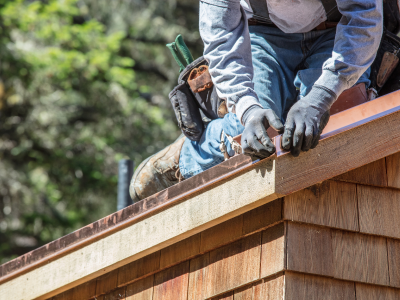
Roofing materials lose flexibility over time. Asphalt shingles become brittle, sealant strips weaken, metal flashing corrodes at fastener points, and wood decking can soften where moisture has been present for extended periods. A roof in this condition may still perform well in ordinary rain.
The stress arrives with the temperature swings of late fall and winter, when materials expand and contract through repeated freeze and thaw cycles. That is one reason fall roof maintenance can carry more weight on an older home. A newer roof has margin, an older roof may have less of it, and the distance between a minor repair and an interior leak can narrow over a single season of deferred attention.
Shingles and the Roof Surface
Start with what is visible from the ground. On older roofs, the surface conditions worth noting include curling edges, cracked faces, exposed mat where granules have worn away, and shingles that have lifted or lost their seal. Valleys and eaves deserve particular attention because they are exposed to concentrated water flow.
Loose or missing shingles are particularly important to address before winter weather arrives. Wind driven rain and snow can push moisture beneath a compromised shingle, and once water reaches the underlayment or decking, the damage continues out of sight. Handling these repairs during fall roof maintenance also keeps the work straightforward, since temperatures still allow proper sealing and adhesion.
Flashing and Roof Penetrations
The roof surface gets most of the attention, but joints and transitions around the roof are also common areas to inspect closely. Flashing is the metal that seals every point where the roof meets something else, including chimneys, skylights, vent pipes, dormers, and wall intersections. On an older home, flashing may have been in service for many years or may include components from earlier repairs.
Chimney and Wall Flashing
Chimney flashing absorbs constant movement from expansion, contraction, and settling. Sealant hardens and pulls away, step flashing works loose, and the mortar joints holding counterflashing can deteriorate. Give these areas a close look during fall roof maintenance, because water that enters at a chimney rarely stays near the chimney.
Vents, Pipes, and Skylights
Every penetration through the roof is a deliberate opening that depends on a seal to stay watertight. Rubber boots around plumbing vents dry out and crack with age, and skylight seals loosen over time. Older homes may also carry abandoned penetrations from equipment that was removed and never properly closed, so check each one as a standard part of fall roof maintenance.
Gutters and Drainage
Drainage is the next link in the chain, and it can fail quietly. Gutters attract little attention until they stop working, and fall fills them with leaves and debris at the point in the year when the system needs to run clear. Water that cannot drain backs up at the roof edge, sits against the fascia, and can work beneath the lowest course of shingles.
Older homes can add a second layer to the problem, because fascia boards may already be weathered and gutter hangers may have loosened. Standing water at the eave is the same failure that makes gutter maintenance during rainy weather important earlier in the year. The difference in fall is that trapped water may eventually freeze instead of draining, so clearing and inspecting the full run is a foundational step in fall roof maintenance.
Attic Ventilation and Airflow
Ventilation is the part of the roof most homeowners never see, and it shapes how the roof performs once snow arrives. Balanced airflow, with intake at the soffits and exhaust near the ridge, keeps attic temperature closer to outdoor temperature and moves moisture out of the space.
When airflow is restricted, warm air can collect under the roof deck. Snow on the roof melts unevenly, water runs toward the colder eaves, and refreezing there can force water back beneath the shingles. Some older homes have had insulation added over time without corresponding ventilation changes. The effects of poor attic ventilation build slowly, which is why reviewing airflow during fall roof maintenance is one of the more useful preventive steps available.
Chimney and Masonry Areas
Beyond the flashing, the masonry itself deserves attention. Older chimneys can develop cracked mortar joints, spalling brick, and deteriorated crowns. Water absorbed into masonry during fall rain expands when it freezes, which can widen existing cracks a little more with each cycle.
Damaged crowns and open joints can also admit water into the chimney structure, where it may reach the roof deck. Because masonry and chimney repair sit alongside our roofing work, fold these areas into fall roof maintenance rather than treating them as a separate project.
How Small Fall Issues Become Winter Problems
Several small issues can worsen as temperatures fall. A lifted shingle admits a small amount of water, a clogged gutter holds water at the eave, and a cracked vent boot lets moisture into the decking. None of these necessarily produce an obvious problem in mild weather.
Freezing changes the outcome. Water that has entered a small gap expands as it freezes and can enlarge the gap, ice at the roof edge blocks drainage and pushes water back under the shingles, and snow adds weight to areas already weakened by moisture. Winter also makes repairs harder to schedule and more difficult to perform safely. Completing a roof inspection before winter is a practical way to find these issues while the repairs are still simple.
When to Schedule Fall Roof Maintenance
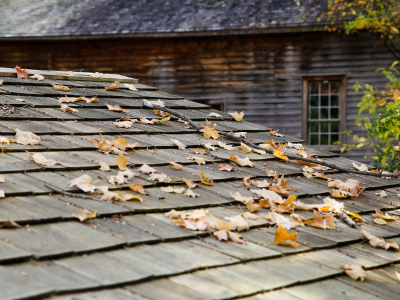
Early fall can be a practical time to schedule maintenance because temperatures are generally more favorable for inspection and certain repairs. Daylight hours are still adequate for thorough work, and starting early leaves room to complete repairs before the first hard freeze. Waiting until late in the season compresses that schedule and can narrow the options.
For homeowners who prefer scheduled care over annual reminders, a residential maintenance program keeps this seasonal work on a consistent cycle and removes the question of when the last review happened.
Fall Roof Maintenance Checklist for Older Homes
- Inspect the shingle surface for curling, cracking, granule loss, and lifted edges
- Check flashing at chimneys, walls, dormers, and valleys for gaps, corrosion, or failed sealant
- Examine vent boots, pipe collars, and skylight seals for cracking or separation
- Clear gutters and downspouts completely, then confirm water discharges away from the foundation
- Tighten or replace loose gutter hangers and note any sagging runs along weathered fascia
- Clear blocked soffit vents and confirm exhaust venting at the ridge is unobstructed
- Check the attic for water stains, damp insulation, daylight, or musty odors
- Assess chimney masonry for cracked mortar, spalling brick, and crown damage
- Trim branches that overhang or make contact with the roof surface
- Document every concern and schedule repairs before the first freeze
Schedule Your Fall Roof Maintenance
Fall roof maintenance is easier to handle before the weather turns, and older roofs benefit from an early start. Brad Smith Roofing works with homeowners across Northeast Ohio on gutters, siding, masonry and chimney work, and skylights. Our team of experts reviews the full roof system, including the shingle surface, flashing, penetrations, drainage, and ventilation, then explains what needs attention now and what can reasonably wait. Our roofers are GAF Master Elite certified. Call us at 440-835-3377 or schedule an appointment on our website to arrange a seasonal review for your older home.
Frequently Asked Questions
1. What is Fall Roof Maintenance?
It is the seasonal review and upkeep of the roof system before winter. The scope covers the roof surface, flashing, penetrations, drainage, chimney areas, and attic ventilation.
2. Why Does Fall Roof Maintenance Matter More for Older Homes?
Aging materials generally have less tolerance for freeze and thaw movement. Original components and past repairs also meet at seams, and those seams can open over time.
3. When Should Fall Roof Maintenance Be Scheduled in Ohio?
Early fall is often practical, since sealing performs better in mild temperatures. Starting early also leaves room for repairs ahead of the first hard freeze.
4. How Often Should an Older Roof Be Inspected?
Once a year is a reasonable baseline, and twice a year suits many older roofs. Checking after significant wind or hail events is also worthwhile.
5. What are the Most Common Problems Found on Older Roofs?
Deteriorated flashing and cracked vent boots are frequent findings. Brittle shingles, clogged or sagging gutters, and blocked soffit vents also turn up regularly.
6. Can Flashing Be Repaired Without Replacing the Roof?
Often yes, since flashing is a separate component. Whether a targeted repair makes sense depends on the condition of the surrounding roof, which an inspection determines.
7. Why Do Gutters Matter for Fall Roof Maintenance?
Fall drops a heavy debris load right before the system has to handle snowmelt. Blocked gutters hold water at the eave instead of moving it away.
8. How Does Attic Ventilation Affect a Roof in Winter?
Warm air trapped under the deck can melt snow unevenly. The runoff may refreeze at the colder edge, block drainage, and push water back beneath the shingles.
9. Should Chimney Masonry Be Checked During Fall Roof Maintenance?
Yes. Water absorbed by cracked mortar and damaged crowns expands as it freezes, and chimney flashing is a recurring leak point on older roofs.
10. What Happens if Fall Roof Maintenance is Skipped?
Problems that stay minor in mild weather can progress once freezing begins. Repairs also become harder to schedule and more difficult to perform safely.

