
A chimney is a hole cut through a finished roof. The masonry above the roofline sheds most of the weather on its own, but the joint where brick meets shingle has to be sealed by metal, and that joint is where leaks usually start. It sits between two trades, so chimney flashing repair comes up in our masonry services as often as it does in our roofing work, since the metal and the brickwork it ties into have to be sound together.
What Chimney Flashing Problems Should Be Checked Before Cold Weather?
The checks that matter most are the ones covering the transition itself. Look at whether the metal is lifting away from the brick, whether the counterflashing is still seated in its mortar joint, whether sealant has cracked or pulled away, whether there is rust or heavy caulk buildup from previous patching, and whether the masonry immediately above the flashing line is intact. Any one of these can indicate that chimney flashing repair is needed.
Timing is the other half of the answer. Chimney flashing repair is far easier to schedule in fall than in the middle of winter, when roof access is limited and conditions are unsafe. A gap that admits a little rain in October can admit meltwater all winter, and winter is when the water has the fewest opportunities to dry.
How Chimney Flashing Is Built
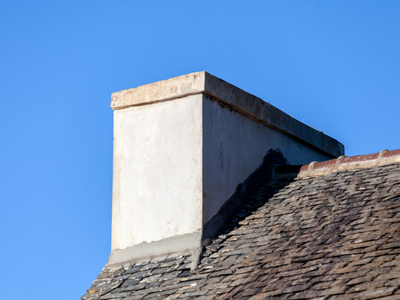
Chimney flashing is a system of pieces rather than one part, and each piece handles a different direction of water.
Step Flashing
Step flashing runs up the sides of the chimney as a series of L shaped pieces, each one woven in with a course of shingles. The layered arrangement is what allows water running down the roof to pass over the metal rather than behind it. When step flashing is corroded, loosened, or was installed as a single continuous piece instead of individual steps, water can work behind it, and chimney flashing repair usually starts here.
Counterflashing
Counterflashing is set into a mortar joint on the chimney and laps down over the top edge of the step flashing. Its job is to direct water running down the brick face outward onto the roof rather than behind the step flashing. Counterflashing that has pulled out of its joint, or that was surface mounted with sealant instead of being let into the masonry, is a frequent reason for chimney flashing repair.
Base Flashing and Crickets
Base or apron flashing covers the low side of the chimney where water arriving from above collects before it moves around the stack. On the high side, a cricket is a small sloped structure that splits the runoff and directs it around the chimney rather than letting it pile against the back wall. Chimneys of significant width on a sloped roof commonly have one, and where a cricket is missing, damaged, or undersized, water and debris tend to collect behind the chimney, which is a common finding during a chimney flashing repair evaluation.
Why Sealant Is Not the Answer
Sealant has a legitimate role at joints and edges, but it is a reinforcement rather than the waterproofing itself. Sealant is exposed to ultraviolet light and to repeated expansion and contraction, and over time it can dry out, crack, or separate from metal and masonry. Failed sealant is one of the more visible signs pointing toward chimney flashing repair.
Heavy caulk buildup around a chimney is worth noting during an inspection, because it usually indicates that someone has patched the same area more than once. A flashing system depending on sealant to stay watertight will generally need attention again, and chimney flashing repair that addresses the underlying detail tends to hold up better than another layer of sealant over the last one.
Masonry Condition Affects the Flashing
Counterflashing is only as secure as the mortar joint holding it. When mortar has deteriorated, the metal loses its anchor and water gains a path. Brick face that has spalled, meaning the outer surface has popped off, can also allow moisture into the masonry above the flashing line, where it can travel down inside the chimney rather than over the metal. Mortar and brick condition are therefore part of any chimney flashing repair assessment.
The crown at the top of the chimney matters for the same reason. Cracks in a crown let water into the masonry core, and that water arrives at the roofline from inside the structure instead of running down the face. A leak of that kind can look identical to a flashing leak from indoors, which is why an inspection typically evaluates the masonry and the flashing together before recommending chimney flashing repair.
What Winter Adds
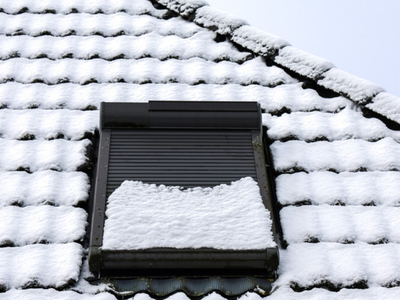
Northeast Ohio moves above and below freezing repeatedly through the cold months. Water that has entered a crack, a mortar joint, or a gap behind flashing can freeze in place, and repeated freeze and thaw cycles may place additional stress on masonry, sealant, and metal that is already compromised. That is the main reason chimney flashing repair is better handled before the cold months than during them.
Snow and ice add a second factor. Snow can sit against the low side of a chimney and behind a missing cricket long after it has cleared from open roof surfaces, which keeps that area wet for extended periods. Ice dams forming lower on the roof can also back water upslope toward flashing details. The conditions that produce ice dams and the conditions that expose weak chimney flashing tend to arrive in the same weeks, which is another reason to finish chimney flashing repair before winter.
Signs Worth Reporting
Most chimney flashing problems show up indoors first. Ceiling or wall stains near the chimney chase, particularly ones that appear during or shortly after rain, are the clearest signal. Damp or musty odors in an attic near the chimney are another. Some conditions are visible from the ground with binoculars, including rust streaking on brick below the flashing line, visible gaps between metal and masonry, lifted flashing edges, cracked or missing mortar around the counterflashing, and brick fragments on the roof or in the gutter.
Stains that only appear in winter deserve particular attention, since they often point to meltwater rather than rainfall. Stains of that kind are among the clearest indicators that chimney flashing repair should be evaluated. Building a habit of seasonal checks is part of basic roof maintenance, and the chimney is one of the areas where that habit pays off most.
Pre Winter Chimney Checklist
Use this as a starting point for spotting chimney flashing repair needs before cold weather sets in.
- View the chimney from the ground with binoculars from more than one angle.
- Look for lifted, rusted, or visibly separated flashing at the roofline.
- Check whether counterflashing still sits in its mortar joint.
- Note heavy caulk buildup, which usually signals past patching.
- Look for cracked mortar, spalled brick, or a damaged crown.
- Check whether debris collects behind the chimney after storms.
- Inspect attic areas near the chimney for damp sheathing or staining.
- Photograph anything you find so changes are easy to track.
- Schedule a professional inspection before winter weather arrives.
Preparing the Rest of the Roof
A chimney check is most useful as part of a broader look at the roof. The same visit that evaluates the need for chimney flashing repair can confirm that shingles are intact, that gutters are clear, and that other penetrations such as vents and skylights are sealed. Preparing a roof for extreme weather is largely a matter of closing small openings before the season that exploits them.
Talk to Us Before the Cold Sets In
If you have seen a stain near your chimney or you are not sure when the flashing was last looked at, Brad Smith Roofing can evaluate it. Our team provides residential roofing services along with masonry work that includes chimney repairs, rebuilds, flashing, caps, and crowns, so the roof connection and the brickwork can be assessed together. Call us at 440-835-3377 or contact us on our website to schedule an inspection.
Frequently Asked Questions
1. What is Chimney Flashing?
Chimney flashing is the metal system that seals the joint where a chimney passes through the roof. It typically includes step flashing along the sides, counterflashing set into the masonry, and base flashing at the low side.
2. Why Do Chimneys Leak More Than Other Roof Areas?
A chimney interrupts the roof plane and creates several changes in direction, each of which has to be sealed. It also combines two different materials, masonry and roofing, that expand and weather at different rates.
3. What is Counterflashing?
Counterflashing is metal set into a mortar joint on the chimney that laps over the step flashing below it. It directs water running down the brick outward onto the roof instead of behind the flashing.
4. Can Sealant Fix a Flashing Leak?
Sealant may slow a leak temporarily, but it is not a lasting solution on its own. It degrades with ultraviolet exposure and temperature movement, and a joint relying on it will usually need proper chimney flashing repair eventually.
5. What is Chimney Cricket?
A cricket is a small sloped structure built on the high side of a chimney that splits runoff and directs it around the stack. It helps keep water and debris from collecting against the back of the chimney.
6. Should Flashing Be Replaced With a New Roof?
It depends on the condition of the existing flashing. New shingles over old flashing can leave the weakest part of the assembly in place, so the flashing is normally evaluated, and chimney flashing repair or replacement considered, as part of any roof replacement.
7. Is a Chimney Leak a Roofing or Masonry Problem?
It can be either, and sometimes both. Water can enter at the flashing joint or through deteriorated masonry and a cracked crown above it, so an inspection usually looks at both before deciding on a repair.
8. How Often Should Chimney Flashing Be Inspected?
Checking it during regular roof inspections is a reasonable baseline, with added attention before winter and after severe storms. Older homes and chimneys with a history of patching often warrant more frequent review, since earlier chimney flashing repair work may be reaching the end of its life.
9. Can I Inspect the Flashing Myself?
You can look for warning signs from the ground with binoculars and check the attic near the chimney. Roof access around a chimney is steep and risky, so the hands on portion is safer left to a professional.
10. What Should I Do if I See a Stain Near the Chimney?
Photograph it, note whether it changes with rainfall or with snowmelt, and contact a roofing professional. That timing detail helps narrow down whether the source is the flashing, the masonry, or condensation.

Stacey is a graduate of BGSU, where she graduated with a B.A. in Interpersonal Communication and a Minor in Marketing. Stacey’s focus of study was Business Management. Stacey has been with the Company since November of 1999, she became the Office Manager in 2003. Stacey now serves as the Vice-President for the Company. She has been a Member of the Rocky River Chamber of Commerce since 2016. Stacey and her brother, Drew Smith, continue to follow in their Father’s footsteps bringing new innovations, new programs, new products and new techniques to help the Company’s efficiency, safety and customer satisfaction.
