
On a flat or low slope building, the roof is not one continuous surface. It is a field of material joined together at seams, and those joints are where most water intrusion begins, which is why seams are among the first things we examine during commercial roof repair and maintenance. The membrane itself is often in better condition than the seams holding it together, and commercial roof seam repair is one of the more common items that comes out of an inspection.
How Can Business Owners Tell When Commercial Roof Seams Need Repair?
The most reliable indicators are visible at the seam itself and inside the building below it. On the roof, look for edges that have lifted away from the substrate, laps that have opened, wrinkles or puckers along the joint, and dark staining that follows the seam line. Inside, water stains that appear in a straight line across a ceiling often follow a seam rather than radiating from a single point, and that pattern is a strong signal that commercial roof seam repair should be evaluated.
Timing matters as much as the symptom. A seam that has separated is already letting water past the primary barrier, and commercial roof seam repair becomes more involved the longer that continues, because saturated insulation below the membrane usually has to be addressed as well. Several common commercial roofing problems begin at a seam and only present as an interior leak later.
How Seams Are Made and Why the Method Matters
Not all seams are joined the same way, and the method influences how they fail. Thermoplastic membranes such as TPO and PVC are typically heat welded, which fuses the sheets together. EPDM and some other systems rely on adhesives or seam tape. Modified bitumen is installed in overlapping plies that may be torch applied, cold adhered, or self adhered depending on the specification.
Welded seams tend to fail at points where the weld was incomplete or where the joint has been mechanically stressed. Adhesive seams are more likely to show gradual separation as the bond ages or as contaminants work into the lap. Understanding which type of commercial roofing is on the building is the first step in judging what any given seam condition means and what commercial roof seam repair would involve.
Membrane Movement
Roofing membranes expand and contract with temperature. Over many cycles, that movement puts repeated stress on the joints holding the sheets together. Some single ply materials can also shrink over time with prolonged heat and ultraviolet exposure, which pulls tension across the seams and at the perimeter. Movement of this kind does not create an immediate failure, but it can reduce how much additional stress a marginal seam will tolerate, and it is a frequent background factor in commercial roof seam repair.
Seam Separation and Open Laps
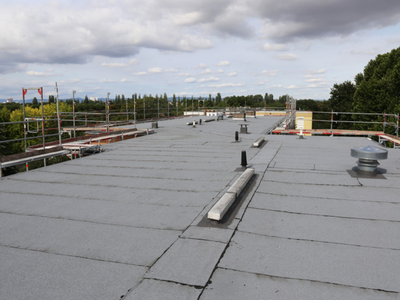
Separation is the condition most people picture when they think about seam failure. The two sheets are no longer bonded along part of their length, and the lap can be lifted or probed open. Even a short section of open lap gives water a direct path beneath the membrane, where it can travel laterally and surface well away from the original opening. Separation is the most common reason owners call about commercial roof seam repair.
A fishmouth is a related condition, where the edge of a lap curls upward into a small opening shaped roughly like a mouth. Fishmouths often form where the membrane was not fully seated during installation or where the sheet has been stressed since. Both conditions are straightforward for a professional to identify during an inspection, and both are typical reasons for commercial roof seam repair.
Flashing Transitions and Perimeter Details
Seams do not only run across the open field of the roof. Some of the most demanding joints are at transitions, where the horizontal membrane turns up a parapet wall, wraps a curb, or terminates at an edge. Those details involve corners, folds, and changes in plane, all of which are harder to seal than a flat lap.
Transitions also tend to sit where water collects or where snow and ice linger. A seam at the base of a parapet may spend far more time wet than one in the middle of the roof. When a leak appears near a wall or an edge, the transition detail is usually the first thing an inspection examines, and commercial roof seam repair at these locations often involves the flashing as well as the seam itself.
Rooftop Equipment and Foot Traffic
Mechanical units, exhaust fans, conduit runs, and equipment stands all sit on curbs or supports that break the membrane plane. Each one creates additional seams and flashing details, and each one draws service technicians onto the roof. That combination is why equipment areas frequently show wear before the rest of the roof does, and why commercial roof seam repair is often concentrated around them.
Foot traffic compresses insulation, scuffs the membrane surface, and can work a marginal seam open over time. Repeated access along the same path creates a corridor of concentrated wear. Walk pads and controlled roof access reduce that pressure, and both are worth considering on any building where technicians visit regularly, since traffic damage is a frequent trigger for commercial roof seam repair. The accessibility that makes flat roofs practical for equipment is also what puts extra demand on the seams near it.
Water Intrusion and What Happens Below
A seam failure rarely stays where it starts. Water that gets beneath the membrane moves along the path of least resistance, which may be a slope in the deck, a seam in the insulation, or a structural member. That is why the interior stain and the actual opening are often in different places, and why commercial roof seam repair begins with locating the true entry point.
Saturated insulation is the part that turns a minor issue into a larger one. Wet insulation loses thermal performance and generally does not dry in place, so it usually has to be removed and replaced as part of the work. Addressing a seam before water has been moving under it for an extended period tends to keep the scope of commercial roof seam repair contained to the joint and the area immediately around it.
Inspection Timing
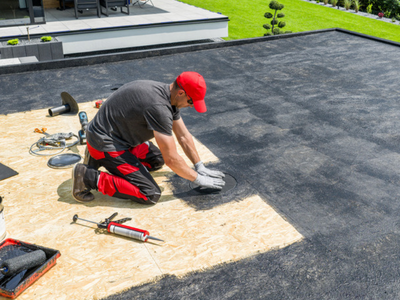
Twice yearly inspection, in spring and fall, is a common baseline for commercial roofs, with additional checks after severe storms and after any major rooftop equipment work. Spring inspection catches what winter did to the seams. Fall inspection confirms the roof is sound before freezing weather, snow load, and ice arrive, which makes it a practical time to schedule any commercial roof seam repair the inspection turns up.
A seam inspection is hands on. A professional will typically probe seams to find sections that have lost their bond, check laps for lifting and fishmouths, examine flashing at every transition, and look closely at the areas around equipment and along traffic paths. Deciding whether commercial roof seam repair is needed comes out of that examination rather than from a look across the roof surface.
Seam Warning Sign Checklist
Use this as a starting point when reviewing a commercial building for signs that commercial roof seam repair may be needed.
- Look for lifted, curled, or visibly open lap edges anywhere on the roof.
- Watch for wrinkles, puckers, or fishmouths along seam lines.
- Check flashing where the membrane turns up walls, curbs, and edges.
- Inspect the area around every piece of rooftop equipment.
- Note dark staining or debris lines that follow a seam.
- Look for ponding water sitting over or near a seam.
- Track interior stains that run in a straight line across a ceiling.
- Document what you find with photographs and dates.
- Schedule professional inspections in spring and fall.
Talk to Us About Your Roof Seams
If a seam on your building has opened or you are tracking a leak you cannot place, Brad Smith Roofing can evaluate it. Our team provides commercial roofing services that include inspections, leak detection, repairs, and ongoing maintenance for flat membrane and sloped commercial systems. Call us at 440-835-3377 or contact us on our website to schedule an inspection for your property.
Frequently Asked Questions
1. What is a Roof Seam?
A seam is the joint where two sheets of roofing membrane overlap and are bonded together, either by heat welding, adhesive, seam tape, or overlapping plies depending on the system.
2. Why Do Seams Fail Before the Rest of the Roof?
Seams carry mechanical stress that the open field does not. Temperature movement, membrane shrinkage, foot traffic, and standing water all concentrate at the joint rather than across the sheet.
3. Can I See Seam Damage From the Ground?
Usually not. Most seam conditions are only visible on the roof surface, and some require probing to confirm. Interior stains are often the first sign a building owner notices.
4. What is a Fishmouth?
A fishmouth is a small opening where the edge of a lap has curled upward. It creates a direct path for water beneath the membrane and is a common finding during seam inspections.
5. Does Ponding Water Damage Seams?
Standing water keeps a seam wet far longer than rainfall would and adds pressure at the joint. It does not automatically cause failure, but it raises the risk that a marginal seam becomes an active leak that needs commercial roof seam repair.
6. Are Welded Seams Better Than Adhered Seams?
Neither is universally better. Heat welded seams and adhered seams simply fail in different ways, and the right system depends on the building, the membrane type, and the original specification.
7. How Does Rooftop Equipment Affect Seams?
Equipment adds curbs, supports, and flashing details that create more joints, and it brings service technicians onto the roof. Both factors tend to concentrate wear in those areas.
8. Can a Seam Be Repaired or Must the Roof Be Replaced?
It depends on the extent of the damage and the overall condition of the membrane. Isolated seam problems on a roof with remaining service life are often handled through commercial roof seam repair, while widespread separation points toward a broader evaluation.
9. How Often Should Commercial Roof Seams Be Inspected?
Spring and fall are the standard windows, with added checks after severe storms and after any significant rooftop equipment work.
10. What Should I Do if I Find an Open Seam?
Photograph it, note its location relative to the nearest drain and to any interior staining, and contact a roofing professional about commercial roof seam repair. Avoid walking on the roof more than necessary, since traffic can widen the opening.

Stacey is a graduate of BGSU, where she graduated with a B.A. in Interpersonal Communication and a Minor in Marketing. Stacey’s focus of study was Business Management. Stacey has been with the Company since November of 1999, she became the Office Manager in 2003. Stacey now serves as the Vice-President for the Company. She has been a Member of the Rocky River Chamber of Commerce since 2016. Stacey and her brother, Drew Smith, continue to follow in their Father’s footsteps bringing new innovations, new programs, new products and new techniques to help the Company’s efficiency, safety and customer satisfaction.
