
Asphalt shingles are covered in tiny mineral granules, and those granules do far more work than most homeowners realize. Shingle granule loss is what happens when that protective surface layer begins to wear away, and it is one of the most common questions we get during residential roof repair and maintenance once granules start showing up in the gutters. It is also one of the most misunderstood, because part of it is completely normal and part of it is a genuine warning sign. Knowing which one you are looking at is the whole point.
What Granules Do on an Asphalt Shingle
An asphalt shingle is built in layers. A fiberglass mat forms the base, asphalt coating surrounds it, and mineral granules are pressed into the top surface while the asphalt is still warm. Those granules are not decoration. They are the shingle’s protective skin.
The granule layer blocks ultraviolet light from reaching the asphalt underneath, and ultraviolet exposure can contribute to asphalt deterioration over time. The layer also gives the shingle its color, contributes fire resistance, and provides the weight and texture that help the shingle lie flat and shed water cleanly. Once you understand that granules are functional rather than cosmetic, shingle granule loss stops looking like a surface blemish and starts looking like what it actually is, which is the gradual removal of a roof’s outer defense.
Why Shingle Granule Loss Happens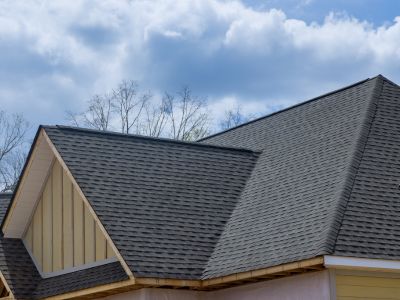
Shingle granule loss has several causes, and not every one of them carries the same weight. Identifying which one is at work matters far more than the granules themselves.
Normal Weathering and New Roof Shedding
Every asphalt roof sheds some granules, and a degree of shingle granule loss is built into how the product ages. On a newly installed roof, loose material left over from manufacturing and handling washes off during the first several rainfalls. That is expected and is not a defect. Rain, wind, and the daily expansion and contraction of the roof surface also release a small, steady amount over the years. Light shedding spread evenly across an otherwise healthy roof is simply the roof doing its job.
Age and Asphalt Hardening
As a shingle ages, the oils in the asphalt dry out and the material grows brittle. Granules that were firmly embedded when the shingle was new begin to lose their grip. That hardening is why shingle granule loss tends to accelerate later in a roof’s service life rather than progressing at a steady rate. A roof can look stable for years and then start shedding noticeably in a fairly short span.
Storm Impact
Hail can cause sudden and concentrated granule loss. A hailstone striking a shingle can knock granules loose in a concentrated spot and bruise the mat underneath, and that damage is often difficult to see from the ground. Wind driven debris scrapes granules away as it travels across the roof, and strong gusts that lift and drop shingles loosen material along the edges. If you notice a sharp increase in shingle granule loss after severe weather, storm impact is a more likely explanation than age.
Foot Traffic and Physical Contact
Walking on a roof causes shingle granule loss directly, especially in hot weather when the asphalt is soft. Contractors, satellite installers, and anyone else who has been on the surface can leave a trail of scuffed shingles behind. Tree branches resting against or dragging across the roof do the same thing over a longer period. This kind of wear is usually localized and traceable to a specific path.
Concentrated Water Flow
Water does not move evenly across a roof. Valleys, areas below upper roof sections, and stretches beneath a downspout that discharges onto a lower roof all carry more volume than the surrounding surface. Over time that concentration produces faster shingle granule loss in those specific areas. When the loss follows the path water takes, it is a drainage pattern rather than a whole roof condition.
Telling Normal Granule Loss From a Problem
Four questions separate routine shedding from something that needs attention.
The first is roof age. Some granule shedding can occur after a new asphalt roof is installed as loose granules from manufacturing and installation wash away. On an older roof, the same finding carries considerably more weight.
The second is volume. Shingle granule loss is easiest to judge by how much material has actually collected, and a light dusting at the base of a downspout is a different situation from a layer deep enough to scoop out of the gutter trough by hand.
The third is distribution. Loss confined to one slope, one valley, or one walking path suggests a specific and often fixable cause. Loss appearing evenly across every elevation suggests the roof as a whole is wearing out.
The fourth is the appearance of the shingles themselves. Advanced shingle granule loss changes how a roof surface looks from the ground. Once you can see dark, shiny asphalt showing through in patches, the protective layer in those spots is gone rather than thinning. Bald areas are the clearest visual evidence that granule loss has moved past normal.
Is Shingle Granule Loss a Sign That a Roof Needs Repair or Replacement?
Shingle granule loss is a sign that a roof should be professionally evaluated, not automatic proof that it needs to be replaced. Whether repair or replacement is the right answer depends on how much granule material is missing, where it is missing from, and what condition the rest of the roof is in.
A targeted repair may be appropriate when damage is limited to a small area and the surrounding roofing system remains in serviceable condition, particularly when the cause can be identified, such as a section struck by hail or a slope worn by concentrated runoff. Replacing the affected shingles can address the exposure without disturbing a roof that is otherwise performing.
Replacement enters the conversation when shingle granule loss appears across multiple slopes, when bald spots are widespread, when the shingles have also begun to curl or crack, or when the roof is already well into its service life. At that point the loss is not an isolated problem to fix. It is a symptom of a roof approaching the end of what it can do. Several other warning signs tend to appear alongside it, and reading them together gives a far more accurate picture than granule loss on its own.
What Happens After the Granules Wear Away
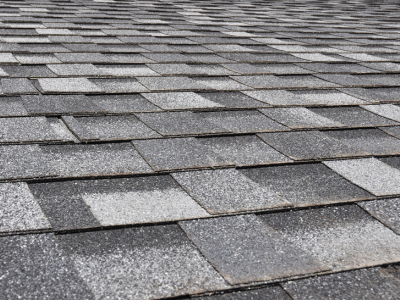
Once shingle granule loss exposes bare asphalt, ultraviolet light reaches that surface directly. The asphalt dries, hardens, and begins to crack and curl, which lifts shingle edges and breaks the seal between courses. Wind gets underneath more easily. Water finds its way toward the underlayment. As exposed asphalt continues to weather, deterioration can progress beyond the areas where granules were initially lost.
A secondary effect is worth knowing about as well. Granules that wash off the roof settle in the gutter trough and restrict flow. Gutters that drain slowly hold water against the roof edge and the fascia, which introduces a second problem alongside the first.
Can Lost Granules Be Put Back?
We hear this question most often once the cause is understood, and the straightforward answer is no. There is no practical way to reapply granules to a weathered shingle so that they bond the way they did at the factory. Coatings marketed for this purpose do not restore the original protection and can interfere with how the shingle sheds water. The workable options are replacing the affected shingles or replacing the roof, depending on scope. Recognizing that early is what makes shingle granule loss worth paying attention to well before it spreads.
How We Evaluate a Roof Losing Granules
When we look at a roof showing shingle granule loss, we are not simply counting bald spots and calling it a day. We check whether the shingles are still flexible or have gone brittle, whether the seal strips are intact, whether there is bruising in the mat that would indicate hail, and whether moisture has reached the underlayment or decking. We look at the valleys, the flashing, and the roof edge, and we check the gutters to see how much material has actually collected. We are a GAF Master Elite certified contractor, and that full assessment is what separates a roof needing a targeted repair from one that has reached replacement.
Photographs and a written assessment matter here as well, particularly when a storm is involved and an insurance claim may follow.
Watching for Granule Loss Between Inspections
Most shingle granule loss is noticed at ground level rather than on the roof, and the gutters are the best place to look. Steady attention to the roof and the drainage system catches change early. Photographing the gutters once or twice a year gives you something concrete to compare against later, which turns a vague impression into an observable trend.
Homeowner Checklist for Granule Loss
- Check the gutter troughs and the ground beneath each downspout for accumulated granules
- Note whether the amount is a light dusting or a measurable layer
- Look for dark, shiny patches where the asphalt shows through the surface
- Compare slopes to see whether the loss is even or concentrated in one area
- Watch for curling, cracking, or lifted shingle edges alongside the granule loss
- Note the roof’s approximate age and installation date if you know them
- Inspect after hail or high wind instead of waiting for a scheduled check
- Photograph what you find so you can track any change over time
- Keep gutters clear so accumulated granules do not restrict drainage
- Schedule a professional evaluation rather than climbing onto the roof yourself
Schedule a Roof Evaluation
If granules are collecting in your gutters and you are not sure what it means, Brad Smith Roofing can tell you where your roof actually stands. Our team of experts evaluates the full roof system, including shingle condition, flashing, underlayment, and drainage, then identifies whether a targeted repair or a new roof is the appropriate next step. We handle residential roof repair and maintenance as well as new roof installation throughout Northeast Ohio. Call us at 440-835-3377 or schedule an appointment on our website to have your roof looked at properly.
Frequently Asked Questions
1. Is Shingle Granule Loss Normal?
A certain amount of shingle granule loss is normal on every asphalt roof. Light, even shedding over the years is routine, and a new roof will release leftover granules during its first few rainfalls. Heavy, sudden, or concentrated loss is what warrants a closer look.
2. Why Do Granules Collect in Gutters?
Rain carries granules loosened by shingle granule loss down the slope and into the gutter system, where they settle in the trough or wash out at the downspout. Gutters are usually where the problem becomes visible first.
3. Does Granule Loss Always Mean Replacement?
No. Localized loss on an otherwise sound roof may be repairable. Replacement becomes the better option when the loss is widespread, bald spots have formed across multiple slopes, or the shingles are also curling and cracking.
4. Can Hail Cause Shingle Granule Loss?
Yes. Hail impact knocks granules loose and can bruise the shingle mat underneath. The bruising is often hard to see from the ground, which is why a roof should be inspected after a significant hailstorm even when nothing looks wrong.
5. How Much Granule Loss Counts as Too Much?
No single threshold applies, and context matters more than volume. Granules in the gutter of a two year old roof mean something very different from the same finding on an aging roof with visible bald spots.
6. Can Granules Be Reapplied to Shingles?
Not in any way that reverses shingle granule loss or restores the original protection. Granules are embedded during manufacturing while the asphalt is warm, and that bond cannot be recreated on a weathered roof. Replacing the affected shingles is the practical remedy.
7. Does Granule Loss Cause Roof Leaks?
Not directly, but it sets the stage. Exposed asphalt breaks down faster under ultraviolet light, which leads to cracking, curling, and broken seals, and those are the conditions that let water reach the underlayment.
8. Why Does a New Roof Shed Granules?
Loose granules from manufacturing, packaging, and installation sit on the surface without being bonded. Rain washes them off over the first several storms. That early shedding is expected and is not a sign of a defective roof.
9. Should Homeowners Walk on the Roof to Check Granule Loss?
We do not recommend it. Walking on shingles dislodges more granules and creates a genuine fall risk, particularly on a wet or aging roof. Checking the gutters and looking from the ground is safer and usually tells you enough to know whether an inspection is warranted.
10. When Should I Schedule a Roof Evaluation?
Schedule one when shingle granule loss increases noticeably, when bald spots become visible, after hail or high wind, or when the roof is old enough that its condition is uncertain. A professional evaluation can help determine whether repair or replacement is the appropriate next step.

Stacey is a graduate of BGSU, where she graduated with a B.A. in Interpersonal Communication and a Minor in Marketing. Stacey’s focus of study was Business Management. Stacey has been with the Company since November of 1999, she became the Office Manager in 2003. Stacey now serves as the Vice-President for the Company. She has been a Member of the Rocky River Chamber of Commerce since 2016. Stacey and her brother, Drew Smith, continue to follow in their Father’s footsteps bringing new innovations, new programs, new products and new techniques to help the Company’s efficiency, safety and customer satisfaction.
