
Not every roof problem needs attention tonight, and treating all of them that way is expensive and stressful. The line that matters is whether water or weather is actively entering the building, which is the threshold we use when a call comes in for emergency roof repairs rather than a scheduled visit.
What Types of Roof Damage May Require Emergency Roof Repair?
Emergency roof repair generally applies when the roof is no longer keeping weather out and waiting would make the damage worse. The clearest cases involve an active leak during a storm, an opening created by wind or impact, a missing section of roofing, a fallen tree or large branch resting on the structure, or sudden water intrusion inside the building.
The common factor is exposure. A damaged shingle that is still shedding water can wait for a scheduled appointment. A hole in the deck cannot, because every additional hour of rain or snow moves water into insulation, framing, and finished interior space.
Active Leaks During Weather
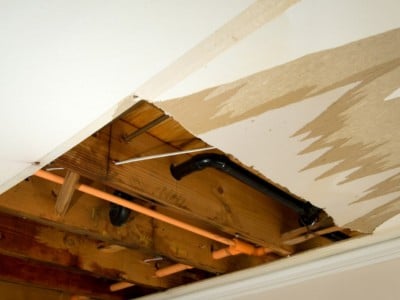
Water coming through a ceiling while it is still raining is the most common emergency roof repair call. The entry point is open and working, and the volume usually increases as the weather continues. A ceiling that is bulging or holding water is urgent for a second reason, since saturated drywall can give way without warning.
A stain that appears after the rain has stopped and does not grow is a different situation. It still needs attention, but it is usually a scheduled repair rather than an emergency. Knowing how heavy rain affects a roof helps separate the two.
Storm Openings and Missing Sections
High wind can strip shingles in groups, peel back a section of membrane on a flat roof, or lift material at an edge or corner where uplift pressure concentrates. Hail and flying debris can puncture the surface outright. Any of these can expose the underlayment or the deck.
Exposed decking is an emergency roof repair situation regardless of the current weather, because the next rainfall will find it. Temporary protection, usually tarping, is often the first step so that permanent work can be planned properly rather than rushed in poor conditions.
Fallen Trees and Impact Damage
A tree or large limb on a roof combines two problems. There is the opening it created, and there is the weight it is still applying to the structure. Both need professional evaluation, and neither is a situation for a homeowner to resolve from a ladder.
Removing a limb without understanding what it is resting on can make matters worse, since the branch may be the only thing currently holding material in place. Emergency roof repair in these cases starts with assessing the structure before anything is moved.
Sudden Water Intrusion Indoors
Water showing up quickly inside a building is worth treating seriously even when the roof looks intact from the ground. Water travels along framing and can surface well away from where it entered, so the visible damage rarely marks the actual opening.
Winter adds another path. Ice at the roof edge can back water up under shingles and into the structure without any storm damage at all, which is why midwinter calls for emergency roof repair often involve ice rather than wind.
What Usually Is Not an Emergency
Several conditions are worth scheduling rather than calling about overnight. A few missing shingles with the underlayment still intact. Granule accumulation in the gutters. A small stain that appeared some time ago and has not changed. Clogged gutters. Minor flashing separation with no water coming in.
These still deserve attention, and ignoring them is how they eventually turn into an emergency roof repair. The distinction is simply whether the building is exposed right now. When in doubt, a phone call costs nothing and a roofing professional can help you judge the urgency.
What to Do Safely While Waiting

There are useful steps a property owner can take, and all of them happen indoors.
- Move furniture, electronics, and valuables away from the affected area.
- Place buckets or containers under active drips and empty them regularly.
- Lay towels or plastic sheeting to protect flooring.
- Turn off electricity to the affected area if water is near fixtures or outlets.
- Keep people away from any ceiling that is bulging or sagging.
- Photograph the damage indoors and from the ground outside.
- Note the date, the time, and the weather conditions.
- Contact your insurance carrier to ask about the claim process.
What Not to Do
Do not climb onto the roof. Wet, damaged, or icy roofing is unstable, and a surface that has lost material may not support weight. Do not attempt to tarp a roof yourself, do not try to remove a fallen limb, and do not break through a bulging ceiling to release water. Each of these is a common source of injury after a storm, and none of them substitutes for emergency roof repair by someone equipped for the conditions.
Documentation and Insurance
Photographs taken before any work begins are the most useful record you can create. Capture the interior damage, the exterior from ground level, any material in the yard, and the date of the weather event. Keep receipts for temporary measures such as tarps or containers.
Coverage and claim outcomes vary by policy, carrier, and circumstance, so we do not predict what any individual claim will produce. Good documentation simply puts you in a better position to discuss it. The steps to take immediately after storm damage overlap heavily with what an insurer will ask for.
Emergency Assessment Checklist
Use this to decide whether a situation calls for emergency roof repair right away.
- Is water actively entering the building right now?
- Is any part of the roof deck or underlayment visibly exposed?
- Is a tree, limb, or other object resting on the roof?
- Is a ceiling bulging, sagging, or holding water?
- Did a storm just pass through with high wind, hail, or debris?
- Is more severe weather expected within the next day?
- Is there any electrical fixture or panel near the water?
A yes to any of these generally means calling now rather than waiting. The same judgment applies after summer storms that can affect a roof, since wind damage does not always announce itself immediately.
Talk to Us When It Cannot Wait
If water is coming in or your roof has been opened by a storm, Brad Smith Roofing offers twenty-four-hour emergency roof repair across Cleveland and Akron. Our team provides roofing and exterior services that include storm damage assessment and repair, tree fall response, roof snow and ice removal, and storm insurance restoration. Call us at 440-835-3377 or contact us on our website and we will get someone out to you.
Frequently Asked Questions
1. What Makes a Roof Problem an Emergency?
The building is no longer protected from weather and waiting would increase the damage. Active leaks, exposed decking, and objects resting on the structure all meet that threshold.
2. Should I Call at Night or Wait Until Morning?
Call when water is entering, when the roof is open, or when more weather is expected. Twenty-four-hour service exists precisely because those situations do not wait for business hours.
3. Can I Tarp the Roof Myself?
It is not advisable. Damaged roofing is unstable underfoot, tarping requires secure attachment that will hold in wind, and a poorly placed tarp can channel water into a new area.
4. Is a Temporary Repair the Same as a Permanent One?
No. Temporary measures stop further intrusion so permanent work can be planned and completed properly, often once conditions improve and the full extent of the damage is understood.
5. What if the Leak Stops on Its Own?
It still needs evaluation. A leak that stops when the rain does usually means the opening is still there and will reopen with the next storm, and moisture may remain inside the assembly.
6. Should I Contact My Insurance Company First?
Protecting the property comes first. Document everything, then contact your carrier to ask about the claim process. Most policies expect reasonable steps to prevent further damage.
7. Can Ice Cause an Emergency in Winter?
Yes. Ice at the roof edge can back water under shingles and into the structure without any storm damage, and the resulting intrusion can appear suddenly during a thaw.
8. How Do I Know Where the Leak Is Coming From?
Often you cannot from inside. Water travels along framing and surfaces away from the entry point, so locating the actual opening usually requires a professional inspection.
9. Are Commercial Buildings Treated Differently?
The urgency threshold is the same, though flat and low slope systems fail in different ways. Open seams, membrane punctures, and blocked drainage are common sources on commercial roofs.
10. What Should I Have Ready When I Call?
The property address, what you are seeing inside and outside, when it started, the weather at the time, and any photographs you were able to take safely from indoors or the ground.

Stacey is a graduate of BGSU, where she graduated with a B.A. in Interpersonal Communication and a Minor in Marketing. Stacey’s focus of study was Business Management. Stacey has been with the Company since November of 1999, she became the Office Manager in 2003. Stacey now serves as the Vice-President for the Company. She has been a Member of the Rocky River Chamber of Commerce since 2016. Stacey and her brother, Drew Smith, continue to follow in their Father’s footsteps bringing new innovations, new programs, new products and new techniques to help the Company’s efficiency, safety and customer satisfaction.
