
Summer in Ohio means warm afternoons, long evenings, and the kind of sudden thunderstorms that can drop a remarkable amount of rain in a very short time. While most homeowners think about the roof when a storm rolls in, the gutters are doing just as much work, and arguably more during the heaviest part of the downpour. A working gutter system is what stands between a routine summer storm and real water damage to the home. Staying ahead of gutter installation needs and timely gutter repair before the next storm season is one of the most practical ways to protect everything below the roofline.
What to Keep in Mind
- Summer storms test gutters harder than any other season because of the volume of rain that arrives at once.
- A failed or undersized gutter system pushes water exactly where it does the most harm.
- Many gutter problems are invisible until a storm forces them to fail.
- Proper gutter installation matters as much as repair, since an undersized or poorly pitched system cannot handle heavy rain.
What Summer Storms Demand From Your Gutters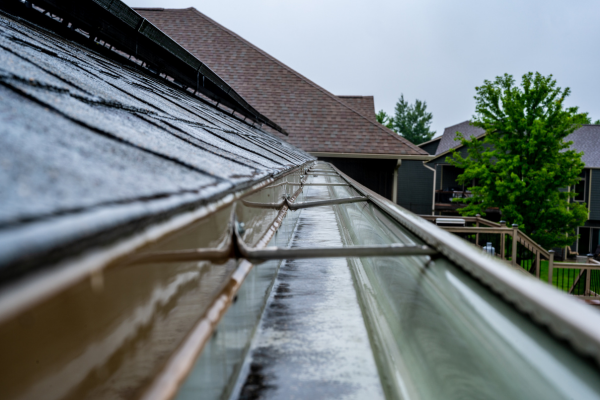
A summer thunderstorm in Ohio is not a light shower. Heavy rain pours off the roof in a concentrated flow that all arrives at the gutters within minutes, and the system has to move that water fast enough to keep up. When it does, the storm passes without consequence. When it cannot, the water has to go somewhere, and that somewhere is rarely good for the home.
The challenge is not just the volume. Summer storms also bring wind that drives rain sideways, debris that blocks downspouts, and the kind of fast temperature changes that stress every seam and fastener. A gutter system that handles light spring rain without complaint can fail under the combined load of a real summer storm, which is exactly why storm season is when neglected gutters reveal themselves.
How Storm-Damaged Gutters Hurt the Home
When gutters fail during a heavy rain, the water does not simply spill harmlessly to the ground. It concentrates exactly where the system was designed to redirect it away from.
Foundation Damage
Overflowing water pools at the base of the home and saturates the soil around the foundation. Saturated soil expands and presses against foundation walls, and over repeated wet cycles this contributes to cracking, settling, and moisture intrusion into basements and crawl spaces. A working gutter system is cheap insurance against expensive foundation work.
Fascia and Soffit Rot
Gutters attach to the fascia board along the roofline, which means a failing gutter is in constant contact with the wood holding it in place. Repeated overflow or trapped standing water keeps that wood wet, and wet wood rots. As the fascia weakens, the gutters loosen further, which makes overflow worse, which rots more wood.
Roof Edge and Shingle Damage
When water backs up in a clogged or undersized gutter, it can rise high enough to pool against the roof edge and work under the lowest course of shingles. Once water gets behind the shingles it can reach the decking, turning a gutter issue into a roof leak that costs significantly more to fix.
Siding and Landscape Damage
The surfaces below the gutter line take the rest of the punishment. Overflowing water streaks the siding, encourages mildew, and over time works behind the siding to reach the wall sheathing. At ground level, concentrated runoff carves channels through mulch, undermines plantings, and washes material away from the foundation perimeter.
Common Reasons Gutters Fail in a Storm
Most storm-season gutter failures fall into a few recognizable patterns. Recognizing them is the first step in deciding whether you need gutter repair or whether the system has reached the point of needing replacement.
Clogs in the Channel or Downspout
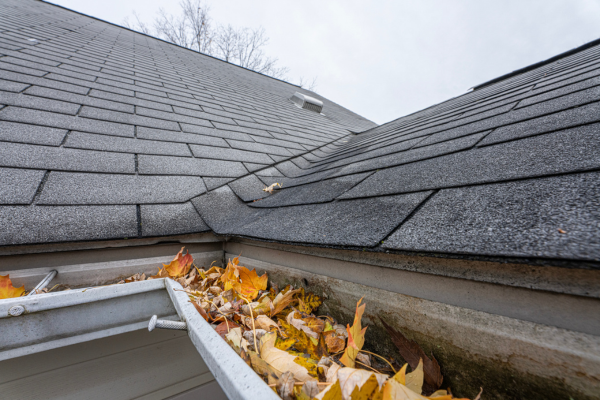
Leaves, twigs, shingle granules, and general debris collect throughout the season, and a clog that handles light rain becomes a full blockage under storm volume.
Sagging or Pulling Away From the Fascia
Loose fasteners or rotted fascia can let sections drop, which breaks the gutter’s slope and causes water to pool rather than drain.
Undersized or Poorly Pitched Gutters
Gutters that are too small for the roof or pitched incorrectly cannot move storm-volume water fast enough, no matter how clean they are. This is a gutter installation issue, not a maintenance issue, and it typically requires professional correction.
Leaking Seams and Joints
Older systems develop leaks at the connection points between sections, and those leaks become much more visible under storm conditions.
Discharge Too Close to the Foundation
Even a perfectly clean gutter fails its purpose if the downspouts dump water within a foot of the foundation. The water still ends up exactly where it should not be.
Signs Your Gutters May Be Failing
After a summer storm, watch for these warning signs:
- Water visibly overflowing the front edge of the gutter during rain
- Streaks or stains on the siding directly below the gutter line
- Pooling water or eroded soil at the base of the downspouts
- Sagging sections or visible gaps between the gutter and fascia
- Granules from the shingles collecting in the gutters or at the bottom of the downspouts
- Leaks at seams or joints during rainfall
- Damp basement walls or new moisture in the crawl space after storms
- Peeling paint or soft spots on the fascia behind the gutters
Summer Storm Gutter Checklist
Use this checklist to keep your gutter system ready for storm season:
- Clean leaves and debris from gutters and downspouts at least twice a year
- Inspect the system after every major storm for new clogs or damage
- Confirm all fasteners are secure and no sections are pulling away from the fascia
- Check seams and joints for leaks during the next rainfall
- Make sure downspouts direct water several feet away from the foundation
- Watch the gutters during an actual rain to confirm water flows freely
- Trim back overhanging branches that drop debris into the gutters
- Schedule professional gutter repair for damage you cannot safely reach
- Consider gutter installation upgrades if the existing system cannot keep up with storm volume
Gutter Installation Versus Gutter Repair
Knowing which service you need saves both time and money. Gutter repair handles isolated failures in an otherwise sound system, such as a leaking seam, a sagging section, or a damaged downspout. Gutter installation comes into play when the existing system is too old, too small, or too damaged to keep up with storm-season demands.
Installation is the right call when gutters are sagging across multiple sections, when seams are leaking despite resealing, when rust or holes appear along the runs, when the system is clearly undersized for the roof, or when repeated repairs are no longer keeping water out. A professional can assess the full system, including the fascia behind it, and recommend whether targeted repair will solve the problem or whether a full replacement is the better long-term investment.
How Gutters Fit Into the Larger Roof System
Gutters do not work in isolation. They are the drainage layer of an exterior that also includes the roof, the fascia, the siding, and the flashing, so a failure in one component often shows up as damage in another. The most reliable way to stay ahead of that is to have one contractor evaluate the roof, fascia, and gutters together, since catching the early warning signs along the roofline is often what stops a developing problem from reaching the structure.
Schedule Your Storm-Season Gutter Inspection
Damage that starts in one storm only gets worse in the next, which makes the stretch right after the weather clears the best time to act. Get ahead of summer storm season with a professional gutter inspection from Brad Smith Roofing. Our team of experts checks the entire system, from the gutters and downspouts to the fascia and roof edge they protect, and identifies whether you need targeted repair or a full upgrade. We specialize in gutter installation and repair built to handle Ohio weather. Call us at 440-835-3377 or schedule an appointment on our website to book your inspection before the next storm rolls in.
Frequently Asked Questions
1. Why are Gutters Especially Important During Summer Storms?
Summer storms drop a large volume of rain in a very short time, which is exactly the load gutters are built for. A failing system cannot keep up, and the overflow ends up against the foundation, siding, and roof edge.
2. How Often Should Gutters be Cleaned?
At least twice a year, typically in spring and fall, and more often if the home is surrounded by trees. Cleaning after major storms is also a good habit, since wind deposits fresh debris quickly.
3. When Should I Repair Versus Replace My Gutters?
Isolated issues like a single leaking seam or a loose hanger are usually repairable. Widespread sagging, rust along multiple sections, or chronic overflow that persists after cleaning usually signals that gutter installation is the better long-term choice.
4. Can Clogged Gutters Really Cause Foundation Damage?
Yes. When gutters overflow, water concentrates at the base of the home and saturates the soil, which over time can contribute to cracks, settling, and basement moisture problems.
5. What is the Difference Between Gutter Installation and Gutter Repair?
Repair fixes specific failures in an otherwise sound system. Installation replaces the system itself, which becomes necessary when the existing gutters are too old, too small, or too damaged for ongoing repair to keep up.
6. Do My Gutters Overflow Even When They Look Clean?
Overflow on seemingly clean gutters often points to a hidden downspout clog, improper slope, or undersized gutters that cannot handle storm-volume rain. A professional inspection can pinpoint the cause.
7. Do Gutter Guards Eliminate the Need for Cleaning?
Gutter guards can reduce how often gutters need cleaning, but they do not eliminate maintenance entirely. Fine debris still accumulates, and the system should still be inspected periodically.
8. How Long Does Professional Gutter Installation Take?
Timing varies based on home size, roof complexity, and the gutter material chosen. A professional can give you a clear estimate after evaluating the home.
9. Can Damaged Gutters Affect My Roof?
They can. When water backs up in clogged or sagging gutters, it can pool against the roof edge and work under the shingles, leading to leaks and decking damage along the eaves.
10. When is the Best Time to Address Gutter Issues?
Before storm season arrives, not during it. Handling repairs and any needed installation work ahead of the next wet stretch ensures the system is ready when it matters most.

Stacey is a graduate of BGSU, where she graduated with a B.A. in Interpersonal Communication and a Minor in Marketing. Stacey’s focus of study was Business Management. Stacey has been with the Company since November of 1999, she became the Office Manager in 2003. Stacey now serves as the Vice-President for the Company. She has been a Member of the Rocky River Chamber of Commerce since 2016. Stacey and her brother, Drew Smith, continue to follow in their Father’s footsteps bringing new innovations, new programs, new products and new techniques to help the Company’s efficiency, safety and customer satisfaction.
