
Your roof and your siding are often treated as separate projects handled at separate times, but they function as one continuous shield against weather, moisture, and temperature swings. When siding and roofing work together correctly, water is directed away from the structure, the building envelope stays sealed, and the interior stays dry through every Ohio season. When one fails, the other is forced to compensate, and the weak point usually shows up as a leak, rot, or rising energy costs. Understanding how these two systems cooperate is the foundation of real home exterior protection.
What to Keep in Mind
- Roofing and siding form a single weather-resistant envelope, not two independent features.
- The transition points where roof meets wall are among the most common places for water intrusion.
- Flashing is the critical connector that ties the roof system into the siding system.
- A failure in one component often accelerates damage in the other if it goes unaddressed.
- Coordinated inspection of both systems catches problems that a single-component check would miss.
- Strong home exterior protection depends on the roof, siding, gutters, and flashing all performing at once.
Why the Roof and Siding Are One System
A home exterior is designed to shed water from the top down. Rain hits the roof, runs off the edges into the gutters, drains away from the foundation, and never gets a chance to sit against the structure. Siding continues that job on the vertical surfaces, shedding wind-driven rain and protecting the wall sheathing underneath.
The problem is that water does not respect the boundary between these two systems. It moves wherever gravity and wind push it. If the roof sheds water perfectly but the siding below has a gap, that water finds the gap. If the siding is flawless but the roof edge lacks proper flashing, water slips behind the siding from above. Siding and roofing only protect the home when they are sealed and coordinated at every shared edge.
The Critical Transition Points
Most exterior water damage does not begin in the open field of the roof or the broad face of the siding. It begins where the two systems meet.
Roof-to-Wall Intersections
Wherever a roof plane meets a vertical wall, such as where a lower roof section ties into a second story, water concentrates. These intersections rely on properly installed flashing to bridge the gap between the roofing material and the siding. When that flashing is missing, corroded, or poorly installed, water runs straight into the wall cavity.
Eaves and Rooflines
The edge where the roof overhangs the wall protects the top of the siding from direct rainfall. If the roofline, fascia, or soffit deteriorates, the upper edge of the siding becomes exposed and vulnerable.
Around Penetrations
Vents, chimneys, and other roof penetrations near walls create additional seams. Each seam is a potential entry point that depends on coordinated flashing and sealing between the roof and the adjacent siding.
How Flashing Connects the Two Systems
Flashing is the unsung hero of home exterior protection. It is the thin layer of metal installed at joints, edges, and transitions to direct water away from vulnerable seams. At the roof-to-wall connection, flashing tucks under the siding and over the roofing so that water always flows on top of a waterproof surface rather than behind it.
When flashing is installed correctly, siding and roofing effectively become one watertight unit. When flashing fails, the connection between the two systems breaks, and water exploits the gap. This is why a roof problem can show up as a siding stain, and a siding problem can show up as a ceiling leak. The systems are linked through their shared flashing.
What Happens When One System Fails
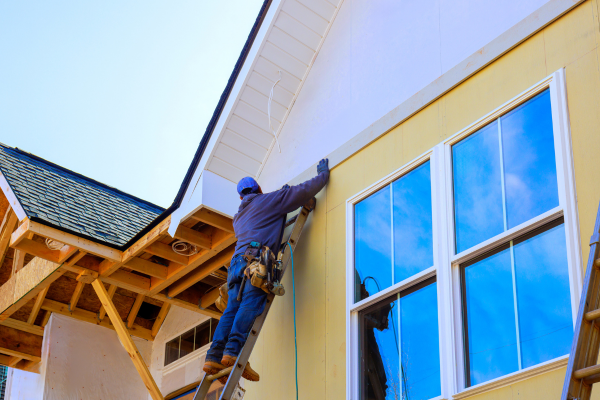 Because the roof and siding share the job of protecting the structure, a failure in one places extra stress on the other.
Roof Failure Affecting Siding
When a roof leaks or its edge details fail, water can run down inside the wall and saturate the siding and sheathing from behind. The siding may look fine from the outside while moisture quietly damages the structure underneath.
Siding Failure Affecting the Roof Structure
When siding cracks, warps, or pulls away from the wall, water reaches the sheathing and can travel upward into the roof structure or down into the foundation. Trapped moisture also encourages rot in the framing that supports both systems.
The Shared Consequences
In both cases, the result is the same: trapped moisture, compromised insulation, higher energy bills, and the risk of structural rot. The damage rarely stays contained to the component that failed first, which is why home exterior protection has to account for both systems at once.
Home Exterior Protection Checklist
Use this checklist to evaluate how well your roof and siding are working together:
- Inspect roof-to-wall intersections for gaps, rust, or lifted flashing
- Check siding for cracks, warping, gaps, or sections pulling away from the wall
- Look for water stains on interior walls or ceilings near rooflines
- Examine the fascia, soffit, and eaves for rot or deterioration
- Confirm gutters are clear and directing water away from the foundation
- Look for peeling paint or bubbling on siding, which can indicate trapped moisture
- Check the attic for daylight or moisture near where the roof meets exterior walls
- Note any drafts or temperature inconsistencies along exterior walls
- Schedule a professional inspection of both systems before storm season
Why Coordinated Inspection Matters
Inspecting the roof alone, or the siding alone, leaves the most failure-prone areas unchecked. The transitions between the two systems only get evaluated properly when both are examined together. A roofer who understands how siding integrates with the roof can spot a flashing gap that a siding-only contractor might overlook, and can confirm that the entire envelope is sealed as a single unit.
This coordinated approach also prevents the common scenario where a homeowner repairs one system, only to discover months later that the untouched system was the actual source of a problem.
Seasonal Stress on the Home Exterior
Ohio weather tests the connection between siding and roofing year-round. Summer heat expands and contracts materials, loosening seals and fasteners over time. Wind-driven rain and summer storms push water sideways into seams that handle vertical rainfall without issue. Winter brings freeze-and-thaw cycles and ice that can pry at flashing and edges. Each season finds a different weak point, which is why staying ahead of damage matters more than reacting to it. Recognizing the first warning signs early is far less costly than addressing a full water intrusion after the fact.
After a Storm: Check Both Systems
Severe weather rarely damages just one part of the exterior. A storm strong enough to lift shingles is usually strong enough to crack or loosen siding as well. After any significant storm, both systems should be evaluated together, with particular attention to the transition points where damage is most likely to let water in. Checking only the roof, or only the siding, leaves half the home exterior protection unverified.
Schedule a Full Exterior Inspection
Protect your home from the top down with a coordinated inspection from Brad Smith Roofing. Our team of experts evaluates the entire exterior envelope, from rooflines and flashing to siding and gutters, so every system works together as it should. We specialize in roofing and siding built to handle Ohio weather. Call us at 440-835-3377 or schedule an appointment on our website to book your full exterior inspection before the next storm arrives.
Frequently Asked Questions
How Do Siding and Roofing Work Together?
Roofing sheds water from the top of the home while siding protects the vertical walls. They connect through flashing at the roof-to-wall transitions, forming one continuous barrier that keeps water out of the structure.
Why Are Roof-to-Wall Transitions So Important?
These transitions are where water naturally concentrates as it runs off the roof toward the walls. Proper flashing at these points keeps water flowing over waterproof surfaces instead of slipping into the wall cavity.
Can a Roof Problem Cause Siding Damage?
Yes. When a roof leaks or its edge details fail, water can run down inside the wall and damage the siding and sheathing from behind, often without any visible sign on the outside.
Can Damaged Siding Affect My Roof?
It can. When siding cracks or pulls away, water reaches the sheathing and can travel into the roof structure or down toward the foundation, encouraging rot in the shared framing.
What Is Flashing and Why Does It Matter?
Flashing is metal installed at seams and transitions to direct water away from vulnerable joints. It is the key connector that ties the roof and siding into one watertight system.
How Often Should I Inspect My Home Exterior?
Inspecting the roof and siding together at least once a year, with an additional check before storm season, is a reliable schedule. Annual reviews catch small issues before they spread between systems.
Should Siding and Roofing Be Replaced at the Same Time?
Not always, but coordinating them is often beneficial. When both are aging, replacing them together ensures the flashing and transitions are integrated correctly rather than patched between mismatched systems.
What Are Signs That Water Is Getting Behind My Siding?
Peeling paint, bubbling, soft spots, interior wall stains, and a musty smell can all indicate trapped moisture behind the siding. These often point to a flashing or roofline issue above.
Does Coordinated Roofing and Siding Improve Energy Efficiency?
A sealed, well-maintained exterior envelope reduces drafts and moisture intrusion, which helps insulation perform as intended and can support more stable indoor temperatures.
Who Should Inspect My Roof and Siding?
Choose a contractor experienced with both systems and how they integrate. A roofer who understands siding and flashing can evaluate the full envelope rather than treating each component in isolation.

Stacey is a graduate of BGSU, where she graduated with a B.A. in Interpersonal Communication and a Minor in Marketing. Stacey’s focus of study was Business Management. Stacey has been with the Company since November of 1999, she became the Office Manager in 2003. Stacey now serves as the Vice-President for the Company. She has been a Member of the Rocky River Chamber of Commerce since 2016. Stacey and her brother, Drew Smith, continue to follow in their Father’s footsteps bringing new innovations, new programs, new products and new techniques to help the Company’s efficiency, safety and customer satisfaction.
