
Fall in Northeast Ohio brings steady rain, falling leaves, and daily temperature swings that test every seam on a roof. Flashing is the thin metal that seals those seams, and it is often the first part of the roof to give way once wet weather settles in, which is why roof flashing problems account for so many of the residential roof repair and maintenance calls we take this time of year. Recognizing them ahead of the season gives homeowners time to address small issues while they are still small.

What Roof Flashing Problems Should Homeowners Check Before Fall Rain?
Before fall rain arrives, homeowners should check flashing for rust and corrosion, metal that has lifted or worked loose, cracked or missing sealant, gaps where flashing meets chimney masonry, worn seals around skylights and vent pipes, and debris packed into roof valleys. Most roof flashing problems are visible from ground level or from inside the attic. Flashing that sits beneath shingle courses or tucks into a mortar joint cannot be evaluated from below and is typically assessed during residential roof repair and maintenance work.
What Flashing Does and Why it Fails
Flashing is a thin, shaped layer of metal installed anywhere the roof surface is interrupted. Shingles shed water well across an open plane, but they cannot seal a corner, an opening, or a change in direction. Flashing bridges those junctions and redirects water back onto the shingle surface so it can drain toward the gutters.
Because flashing sits at the points where water concentrates, it absorbs more wear than the field of the roof around it. Metal expands and contracts with temperature. Fasteners loosen. Sealant hardens and shrinks. Over several seasons, that ordinary wear becomes the roof flashing problems homeowners tend to notice only after a stain appears on a ceiling.
Where Flashing is Installed
Most homes have flashing in several places, including:
- Around the base and sides of a chimney
- Along the perimeter of a skylight
- Around plumbing stacks, exhaust vents, and attic vents
- In roof valleys where two slopes meet
- Where a roof plane meets a vertical wall or dormer
- Along drip edges at the eaves and rakes
Each location handles water a little differently, which is why flashing failures rarely look the same from one house to the next.
Common Flashing Failures to Watch for Before Fall Rain
Recognizing the pattern matters more than naming the exact part. The roof flashing problems below account for much of the water intrusion that surfaces during a wet autumn, and several of them tend to appear together on an older roof.
Rust and Corrosion
Older flashing is often galvanized steel, and galvanized coatings wear thin with age. Once that protective layer is gone, rust spreads across the metal and can eventually open pinholes. Rust streaks running down a chimney or a wall below a flashing line usually indicate the metal has been deteriorating for a while. Corrosion is one of the more visible roof flashing problems, and it often shows up first on slopes that stay shaded and damp.
Loose or Lifted Metal
Wind, ice, and foot traffic can pull flashing away from the surface it was fastened to. Lifted edges create a channel that funnels water underneath the shingles instead of over them. Wind driven rain, which is common in fall, pushes water sideways and finds those openings quickly. Loose metal is among the roof flashing problems that can look minor from the ground while allowing a meaningful amount of water into the roof deck.
Failed Sealant and Caulk
Sealant is meant to support flashing, not replace it. When roofing cement or caulk becomes the only barrier at a joint, that joint is already vulnerable. Sealant hardens, cracks, and pulls away from metal and masonry as it ages. Heavy reliance on caulk is a common indication that a previous repair addressed the symptom rather than the flashing failure underneath it. Sealant alone will not resolve roof flashing problems that have reached the metal.
Gaps Where Masonry Meets the Roof
Chimney flashing usually involves two layers working together: base flashing that ties into the shingles, and counter flashing that tucks into the masonry above it. Mortar joints erode, counter flashing works loose, and a gap opens at the seam. Because chimneys sit above the roofline and take the full force of the weather, they account for a disproportionate share of roof flashing problems. Weather exposure affects chimney masonry and flashing together, which is why chimney work and flashing work are frequently handled at the same time.
Skylight Perimeter Wear
A skylight is an opening cut into the roof and then sealed back up, so its perimeter depends entirely on flashing and sealant. Leaks around skylights usually begin at that perimeter rather than at the glass. Lifted metal at the corners, staining on the interior frame, or persistent moisture below the unit all point toward roof flashing problems rather than a failed window. Most skylight leaks start at the flashing, which makes the surrounding roof surface just as important as the skylight itself.
Valleys and Vents Blocked by Debris
Valleys carry more water than any other part of the roof, and fall fills them with leaves and twigs. Debris holds moisture against the metal, accelerates corrosion, and can push water sideways under the shingle edges. Vent flashing has a similar weakness, since the rubber boot around a plumbing stack becomes brittle with age. Clearing debris will not repair flashing that has already deteriorated, but leaving it in place accelerates the damage.
How Fall Weather Exposes Weak Flashing
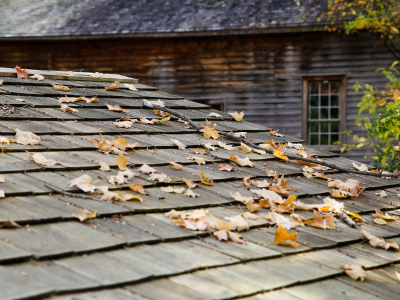
Summer storms are intense but short. Fall rain in Ohio is more often steady and repetitive, and that difference matters. A joint that sheds a brief downpour may not shed several hours of light rain, because water has time to work into every gap rather than running past it. That sustained exposure is what turns minor roof flashing problems into active leaks.
Temperature also shifts sharply through the season. Warm afternoons and cold nights cause metal to expand and contract on a daily cycle, which works fasteners loose and stresses whatever sealant remains. Add wind driven rain and accumulating leaf debris, and the conditions that expose roof flashing problems all arrive within the same few weeks.
What Homeowners Can Check From the Ground
Climbing onto a roof is unnecessary for this kind of review, and in wet conditions it is unsafe. A careful look from ground level, with binoculars if needed, reveals more roof flashing problems than most homeowners expect.
Look for:
- Rust streaks on a chimney, a wall, or the shingles just below a flashing line
- Metal that appears lifted, bent, or separated at the edges
- Visible gaps where a chimney or dormer meets the roof surface
- Dark staining on siding beneath a roof to wall junction
- Debris packed into valleys or around vent pipes
- Patches of exposed roofing cement, which often mark a previously repaired joint
None of these confirm a leak on their own. Taken together, they build a picture of where roof flashing problems are most likely developing.
Interior Signs Worth Taking Seriously
Some of the clearest evidence of roof flashing problems shows up indoors. Water that enters at a flashing joint often travels along framing before it becomes visible, so a stain rarely sits directly beneath the failure point.
Inside the home, watch for:
- Brown or yellow ceiling stains, particularly near a chimney or skylight
- Bubbling paint or softening drywall along an upper wall
- A musty odor in an upstairs room or closet
- Damp insulation, water tracks on rafters, or daylight visible in the attic
- Rust on nail heads or metal connectors in the attic
These overlap with other early signs that a roof is failing, and flashing is one of the first places a roofer checks when they appear. Interior evidence usually means roof flashing problems have been developing for some time rather than starting with the most recent storm.
Why a Professional Inspection is Often Necessary
Flashing details are difficult to evaluate from a distance. Counter flashing tucked into a mortar joint, step flashing hidden beneath shingle courses, and the condition of the underlayment under a valley are not visible from the ground at all. A roofer can also separate roof flashing problems that need resealing from those that need replacement, and can identify a leak that originates elsewhere and only becomes visible near a flashing line.
At Brad Smith Roofing, our residential roof repair and maintenance work includes evaluating these transition points, and our masonry services cover chimney flashing alongside brick and mortar repair. Skylight repair is approached the same way, treating the unit and the surrounding roof as one system. Addressing roof flashing problems ahead of the wet season is generally less disruptive than responding to an active leak in the middle of it.
Fall Flashing Checklist
Work through this before the rainy stretch settles in:
- Walk the perimeter of the house and look at every chimney, skylight, dormer, and vent
- Note any rust streaks, lifted metal, or visible gaps at the roofline
- Confirm that valleys and vent surrounds are clear of leaves and debris
- Check that gutters and downspouts are draining freely
- Inspect the attic on a bright day for daylight, damp insulation, or water tracks
- Photograph anything questionable so changes can be compared later in the season
- Review ceilings and upper walls for new or spreading stains
- Schedule a professional inspection if anything on this list stands out
Schedule an Inspection Before the Rain Sets In
Fall rain finds the weak points on a roof faster than any other season. If you have noticed rust, lifted metal, staining, or anything else that suggests roof flashing problems, Brad Smith Roofing can take a closer look. Our team of experts handles residential roof repair and maintenance, chimney and masonry work, and skylight repair throughout Northeast Ohio. Call us at 440-835-3377 or schedule an appointment on our website to arrange an inspection before the wet season arrives.
Frequently Asked Questions
1. What Are the Most Common Flashing Failures?
The most common roof flashing problems are rust and corrosion, metal that has lifted or worked loose, sealant that has cracked or pulled away, and gaps where flashing meets masonry. Debris packed into valleys and worn vent boots are close behind.
2. Why Does Flashing Fail More Often in Fall?
Fall combines steady rain, wind, falling debris, and daily temperature swings. Rain that lasts for hours has more opportunity to work into a small gap than a brief summer storm does, and expanding and contracting metal stresses aging sealant at the same time.
3. Can Flashing Damage Be Seen From the Ground?
Often, yes. Rust streaks, lifted or bent metal, visible gaps at a chimney, and debris in valleys are all detectable from ground level, especially with binoculars. Hidden details such as step flashing under shingles require a closer inspection.
4. Does Rust on Flashing Always Mean it Needs Replacement?
Not necessarily. Light surface rust may be a maintenance item, while corrosion that has thinned the metal or opened pinholes usually calls for replacement. A roofer can assess how far the deterioration has progressed.
5. Is Caulk a Reliable Fix for Damaged Flashing?
Caulk and roofing cement are short term measures. They can slow a leak, but they are not designed to carry the load that properly installed metal carries. Repairs that rely only on sealant tend to reopen.
6. How Does a Flashing Leak Cause Ceiling Stains?
Water entering at a flashing joint runs along the underside of the roof deck or down a rafter before it soaks into insulation and drywall. That is why a ceiling stain is often several feet away from the actual point of entry.
7. Are Skylight Leaks Usually a Flashing Issue?
Frequently, yes. The glass itself is one of the more durable parts of a skylight assembly. Leaks more often begin at the flashing, the sealant, or the shingles immediately around the unit.
8. How Often Should a Homeowner Inspect Flashing?
A visual review twice a year is reasonable, typically in spring and again in fall, plus an additional look after any significant storm. Professional inspections catch the details that are not visible from the ground.
9. Can Clogged Valleys Lead to Flashing Damage?
Debris in a valley holds moisture against the metal and can force water sideways beneath the shingle edges. It does not create roof flashing problems on its own, but it accelerates corrosion and worsens any weakness already present.
10. What Should I Do if I Suspect a Flashing Leak?
Document what you can see, avoid climbing onto a wet roof, and arrange a professional inspection. Roof flashing problems identified before the rainy season is typically simpler to address than the interior repairs that follow an unnoticed leak.

Stacey is a graduate of BGSU, where she graduated with a B.A. in Interpersonal Communication and a Minor in Marketing. Stacey’s focus of study was Business Management. Stacey has been with the Company since November of 1999, she became the Office Manager in 2003. Stacey now serves as the Vice-President for the Company. She has been a Member of the Rocky River Chamber of Commerce since 2016. Stacey and her brother, Drew Smith, continue to follow in their Father’s footsteps bringing new innovations, new programs, new products and new techniques to help the Company’s efficiency, safety and customer satisfaction.
